
Cozy Cottage Kitchen Ideas That Make You Never Want to Leave
Some visuals may be AI-generated when helpful. All opinions are my own.
I have spent an embarrassing amount of time looking at cottage kitchen photos and the thing I keep coming back to is that none of the ones that actually work look designed. They look accumulated — like someone lived in a kitchen for twenty years and kept the things that mattered and quietly got rid of everything else. That quality of accumulated life is exactly what makes a cottage kitchen feel the way it does. You walk in and something relaxes in you immediately. Here’s everything I found that creates that feeling.
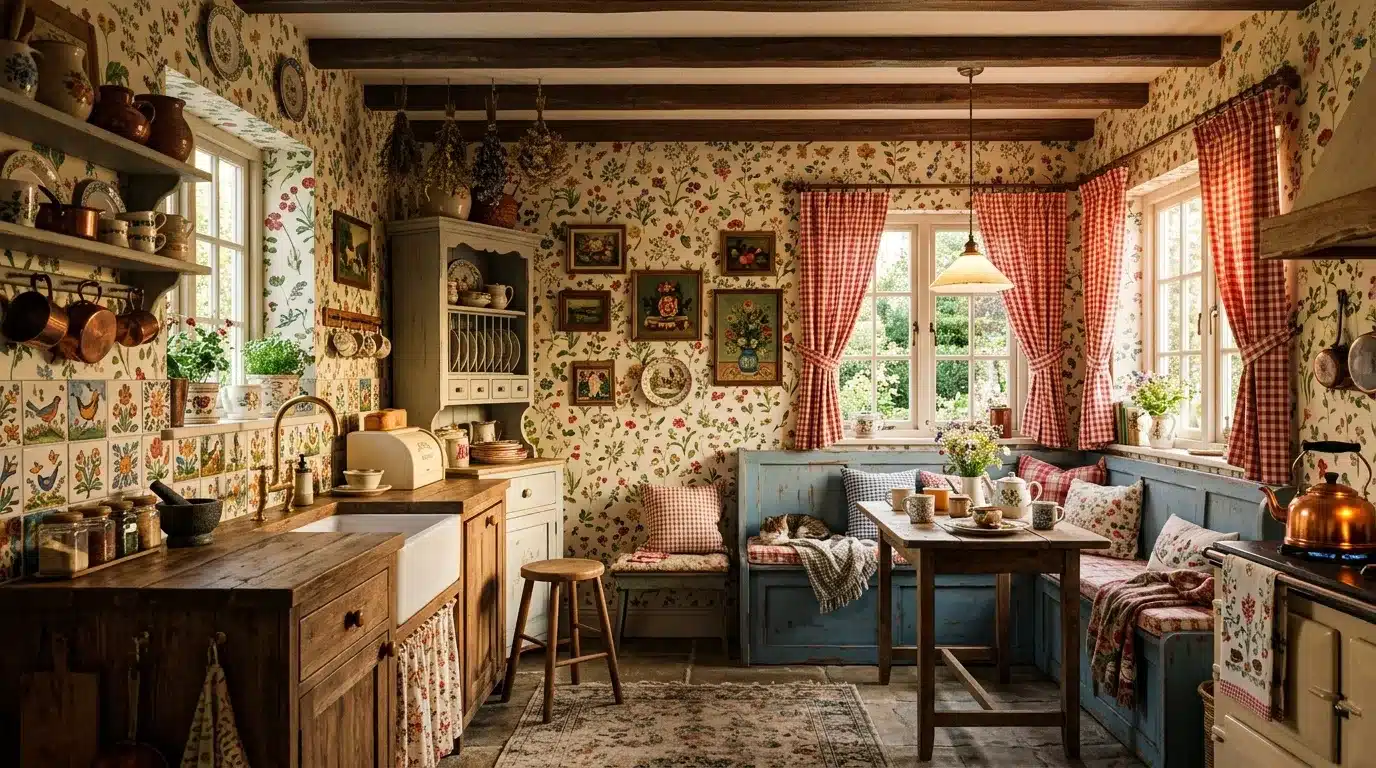
Copper pots hanging from a ceiling rack above a worn butcher block are the cottage kitchen details that communicate use rather than display. Everything in the best cottage kitchens looks like it has been used regularly and will be used again shortly. The fresh herbs on the windowsill are the detail that adds the botanical dimension — the kitchen is a growing place as much as a cooking place — and that overlap between garden and kitchen is specifically what cottage design does better than any other style.

Sage green cabinets in a cottage kitchen are the color choice that connects the interior to the garden outside in a way that white or cream cannot. The sage brings the outside in without making the kitchen feel outdoor and the combination of that green with cream ceramics and stone floor is one of those material conversations that feels inevitable rather than designed. The mismatched chairs at the small table are the detail that confirms this is a kitchen where people sit and stay rather than cook and leave.

The Aga range cooker in deep red is the cottage kitchen appliance that functions as both heat source and heart of the room — it’s always warm, it’s always present, and everything in the kitchen is subtly organized around its permanence. Dried lavender hanging from the dark beams above connects the kitchen to the countryside outside and the transferware plates on the dresser are the accumulated collection that communicates decades of use and care.

Vintage cookbooks on open shelving in a cottage kitchen are the objects that function as both decoration and biography — the specific titles, the worn spines, the bookmarks still inside — communicating that this kitchen is used by someone who thinks about cooking as a pleasure rather than a necessity. The marble island top is the single element that adds refinement to an otherwise rustic space and that one refined element is what keeps cottage kitchens from collapsing into purely nostalgic territory.

Dried herb bundles hanging from the kitchen ceiling are the cottage detail that engages smell before anything else — lavender, rosemary, and chamomile warm slightly in the kitchen air and the room smells like a garden and a kitchen simultaneously. That specific scent combination is something no visual styling can manufacture and it’s the quality that makes people stop in a cottage kitchen doorway before they’ve even processed what they’re seeing.

The cat sleeping on the window seat cushion is the cottage kitchen detail that cannot be staged or purchased. A window seat in a cottage kitchen with a sleeping cat on it is the image that makes people feel something specifically warm and domestic in a way that goes beyond decoration. The faded floral fabric — faded rather than new — is the material honesty that cottage kitchens require. New floral fabric looks like a decision. Faded floral fabric looks like a life.

A glimpse of a well-stocked walk-in pantry through an open door is one of the most specifically satisfying images in cottage kitchen photography because it promises abundance — preserved things, stored things, things made and kept — and that promise of provision is the deepest comfort response that a kitchen can trigger. The single bare bulb illuminating the pantry shelves is the lighting detail that makes it feel like a discovery.

The grocery list still written on the chalkboard is the cottage kitchen detail that communicates ongoing life rather than a finished decoration. Someone wrote that list. Some of those items have probably been crossed off. The list exists between the last shopping trip and the next one and that temporariness is what makes the kitchen feel inhabited in real time rather than styled for a photograph. It’s the most honest thing on the wall.

A fireplace in a kitchen is the cottage feature that makes the room the warmest place in the house in both the literal and emotional sense and when there’s a small armchair beside it with a knitted blanket, the kitchen stops being a functional room and becomes the room where everything important happens. Sitting beside a kitchen fireplace while something cooks in a cast iron pot is a specific experience of domestic life that most contemporary homes have designed entirely out of their floor plans.

A kitchen dresser that fills an entire wall with a complete mismatched china collection is the cottage kitchen feature that takes generations to fully assemble and carries the visual character of the whole room. The specific combination — floral patterns that don’t quite match, the small ceramic animals that came from somewhere specific, the vintage clock that probably keeps slightly wrong time — is the biography of a household displayed on shelves. No single shopping trip could produce this and that’s entirely the point.

Yellow cottage kitchen cabinets are the color commitment that makes the room feel specifically like morning regardless of the time of day. The copper fixtures warm the yellow further and the view of the cottage garden through the window above the sink connects the kitchen to its surroundings in the way that all good cottage kitchens do — you can see where the herbs come from, where the vegetables grew, what the weather is doing while you cook.

A cottage kitchen at dusk with rain against the dark window, something simmering, and a glass of apple juice is the image that makes people ache for it in the best possible way. The under-cabinet warm lighting and candles on the table are doing everything the overhead lights would do but more warmly, more specifically, and the steam rising from the pot is the active element that makes the scene feel genuinely in progress. This is not a decorated kitchen. This is a kitchen being lived in.

The crumbs on the tablecloth and the butter already at room temperature are the cottage kitchen details that make the breakfast scene feel real rather than styled. Someone has been here before you and will be here again shortly. The wildflowers in a jam jar are the gesture of someone who picked them on the way in from the garden and put them in whatever was at hand, which is the cottage kitchen approach to decoration applied to flowers — no special vase required, just a jar and the willingness to bring something beautiful inside.

Vintage glass bottles collected over time and displayed on reclaimed wood shelving is the cottage kitchen feature that communicates a sensibility — someone who sees the beauty in a specific green bottle found at a market, who brings it home and places it with the others, who has been doing this long enough that the collection has become a wall. That accumulated quality is the most honest version of cottage kitchen decoration and the one that’s hardest to manufacture quickly.

A deep kitchen garden window with tiered glass shelves of herbs is the cottage kitchen feature that brings the garden all the way inside — not just visible through the glass but actually present on shelves of terracotta pots above the sink. Washing dishes under a window full of growing herbs and a garden beyond is the specific cottage kitchen experience that turns an ordinary daily task into something you don’t mind doing.

Bread cooling on a wire rack beside a jar of homemade jam with frost on the window outside is the cottage kitchen image that engages every sense before the eye has finished processing the visual information. The warmth, the smell, the specific cold-outside-warm-inside quality of a cottage kitchen in winter are all present in a single image and that sensory completeness is what makes people stop scrolling and stay with the photo for longer than they intended.

Pots of herbs hanging at different heights from the kitchen ceiling over the island is the cottage kitchen installation that turns overhead space into garden space and gives the kitchen vertical depth that standard kitchens completely ignore. Reaching up to snip rosemary or basil directly into whatever is cooking below is the specific domestic experience that this ceiling garden makes possible and that direct connection between growing and cooking is the cottage kitchen ideal at its most literal.

Cottage kitchens work because they’re honest. The worn countertop, the mismatched chairs, the grocery list on the chalkboard, the cat on the window seat, the drying dishes — none of it is trying to be anything other than what it is. The accumulation of use and time and small decisions made by the people who live there is the decoration and no amount of deliberate styling can replicate it. What you can do is make the decisions that allow accumulation — open shelving, real wood, things that age rather than things that show their age — and then live in the kitchen long enough for it to become itself.


