
Kitchen Coffee Corner Ideas That Make Mornings Worth Having
Some visuals may be AI-generated when helpful. All opinions are my own.
I didn’t understand the kitchen coffee corner concept until I visited a friend who had set one up properly — a dedicated section of counter with a specific character, specific materials, specific objects — and I realized that making coffee in that corner felt completely different from making coffee anywhere else in any other kitchen. The coffee corner is not about having a good espresso machine, though it helps. It’s about having a place in your kitchen that belongs entirely to one ritual and has been made accordingly. Here’s everything I found that makes a coffee corner actually work.
The collection of mugs in varying heights on a shelf above the espresso machine is the coffee corner detail that makes the ritual of choosing your mug part of the morning rather than a rummage through a cabinet. When mugs are displayed at eye level above the machine, the specific mug for the specific morning becomes a small conscious choice and that choice is the beginning of paying attention, which is what the coffee corner is actually designed to produce.

A dedicated coffee cabinet with bi-fold doors that conceal the entire station when closed is the coffee corner for kitchens where the counter needs to be clear when coffee is not being made. The pull-out shelf at the right working height, mugs on door hooks, accessories in a drawer — everything for the coffee ritual is in one place and everything disappears when the doors close. The organization within is the reward for opening the doors each morning.

A hand grinder beside a jar of whole coffee beans in a cottage kitchen coffee corner is the equipment choice that makes the morning ritual more deliberate — the grinding is a physical act, it takes a specific time, it produces the specific smell of freshly ground coffee before any coffee has been made. That sequence of physical engagement with the coffee before drinking it is what a dedicated coffee corner makes possible and what a pod machine in a drawer does not.

A recessed kitchen coffee niche is the architectural coffee corner solution that makes the station feel built rather than added. The marble tile inside the niche frames the black coffee machine and the floating wooden shelf above in a composition that looks designed rather than assembled, and the under-shelf lighting creating a warm glow makes the niche visible and inviting in a dark morning kitchen before any other lights are turned on.

A marble tray organizing the coffee objects into a single contained element is the coffee corner styling decision that makes a section of countertop look like a considered display rather than an accumulation. The moka pot and French press are the brewing methods that have their own aesthetic — the Italian industrial beauty of the moka pot, the glass simplicity of the French press — and displaying them on a tray rather than behind a cabinet door makes the equipment part of the kitchen’s visual identity.

A freestanding wooden console as a coffee station is the rental kitchen coffee corner solution that requires no installation and no permanent changes — the console moves, the organization moves with it, and the coffee corner can be wherever it makes most sense in the space. The plant in terracotta and the wooden mug rack give it the organic warmth that makes the coffee corner feel like a specific and personal place rather than a functional station.

A dark painted section of wall as the backdrop for a black espresso machine and black mugs on black shelving is the coffee corner that works through absolute tonal consistency — every element is within the same dark palette and the only break is the single pendant’s warm light and the plant’s dark green. The focused pendant above the station makes it feel theatrical in the best possible way and in a morning kitchen where everything else is still dim, a focused warm light above the espresso machine is a very specific and very effective invitation.

A chalkboard menu beside the espresso machine with the household’s preferred drinks written on it is the coffee corner detail that makes the station feel like it belongs to specific people with specific preferences. “Double shot for Dad, oat milk latte for Mum, hot chocolate for the kids” — the menu is both functional reference and small autobiography, and the chalk makes it changeable, which means it stays current rather than becoming a static decoration.

A wall-mounted capsule organizer that displays the pod collection by intensity or flavor is the coffee corner feature that makes pod coffee look considered rather than convenient. When the capsules are visible, organized, and accessible, choosing a coffee becomes part of the ritual rather than a rummage through a drawer, and the wooden shelving with matching mugs in terracotta and cream tones gives the station enough organic warmth that the convenience of the pod machine doesn’t read as its dominant quality.

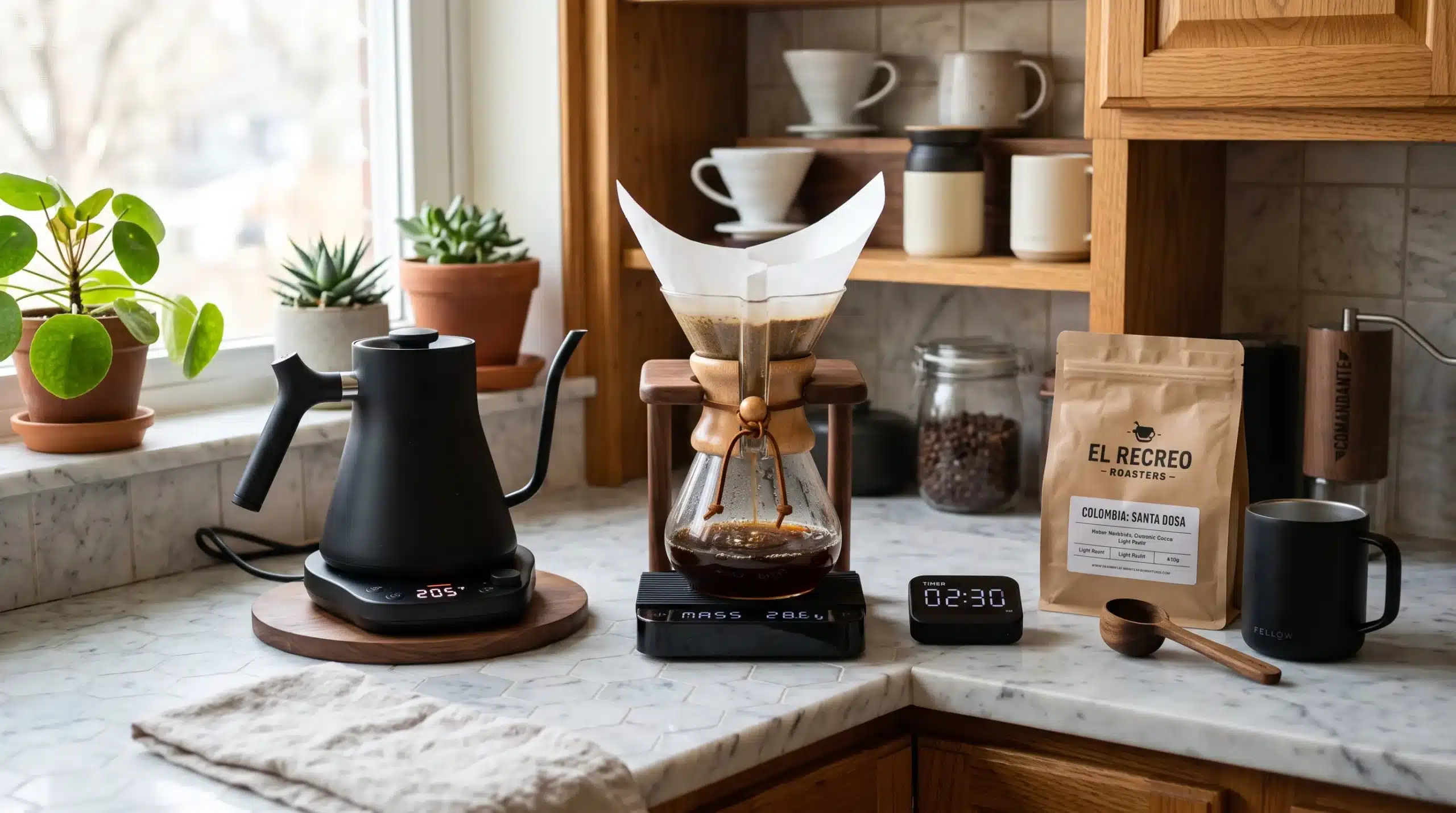
A pour-over coffee station with a gooseneck kettle, Chemex, scale, and timer is the coffee corner for people who approach coffee as a practice rather than a habit. Each element serves a specific function in the pour-over ritual — the scale for the precise coffee weight, the timer for the bloom and the pour, the gooseneck for the controlled flow. The visible specialty coffee bag with its tasting notes confirms that the coffee is the point and the station was designed around it.

Painting the coffee nook cabinets a different color from the rest of the kitchen is the design decision that makes the coffee corner architecturally distinct without any structural work. The sage green nook beside white kitchen cabinets signals clearly that this section is different — it has its own identity, its own purpose, its own character — and that visual differentiation is what turns a section of counter with a coffee machine into an actual coffee corner.

Forty or fifty mugs on wall hooks as the main decoration of a kitchen coffee corner is the collection display that functions as autobiography. Every mug in a large personal mug collection has a provenance — bought on a trip, given as a gift, chosen because of a specific design — and the whole wall of them communicates the accumulation of those choices over time. The coffee machine below is almost secondary to the collection above because the mugs are the real evidence of how seriously coffee is taken in this kitchen.

A coffee station positioned below a window so that morning light falls directly on it is the placement decision that makes the coffee corner the most beautiful spot in the kitchen at the specific time it’s used. Morning light on a coffee machine, on the shelf of mugs above, on the small mint plant beside it — the corner receives the morning’s best light at the exact moment the morning’s most important ritual is performed. That alignment of light and purpose is the coffee corner working perfectly.

A small bistro table and two chairs in a kitchen coffee corner is the coffee corner that becomes a place to sit rather than simply a place to make coffee. The addition of seating changes the coffee’s meaning — it’s no longer a quick morning preparation but an occasion for two people to sit and drink coffee in their own kitchen as if they were somewhere worth being specifically. The La Marzocco style machine and French café posters complete the fiction of the neighborhood café that the best kitchen coffee corners always aspire toward.

One beautiful mug, a small notebook, a candle, a plant, the first morning light — this is the coffee corner that understands that the ritual is about more than coffee. The notebook beside the mug suggests that the coffee corner is where mornings are thought about as well as tasted, and the candle and plant make the station feel like a place deserving of attention rather than a functional requirement. The coffee corner done at this level of intention is the kitchen feature that makes the whole morning feel worth beginning.

Kitchen coffee corners work because they acknowledge that the morning coffee ritual deserves a dedicated place rather than a borrowed section of counter. When the coffee station has its own character, its own materials, its own objects, making coffee becomes an act of going somewhere specific rather than a task performed in a general space. That specificity changes the quality of the morning in a way that’s difficult to explain before you’ve experienced it and very difficult to give up once you have.


