
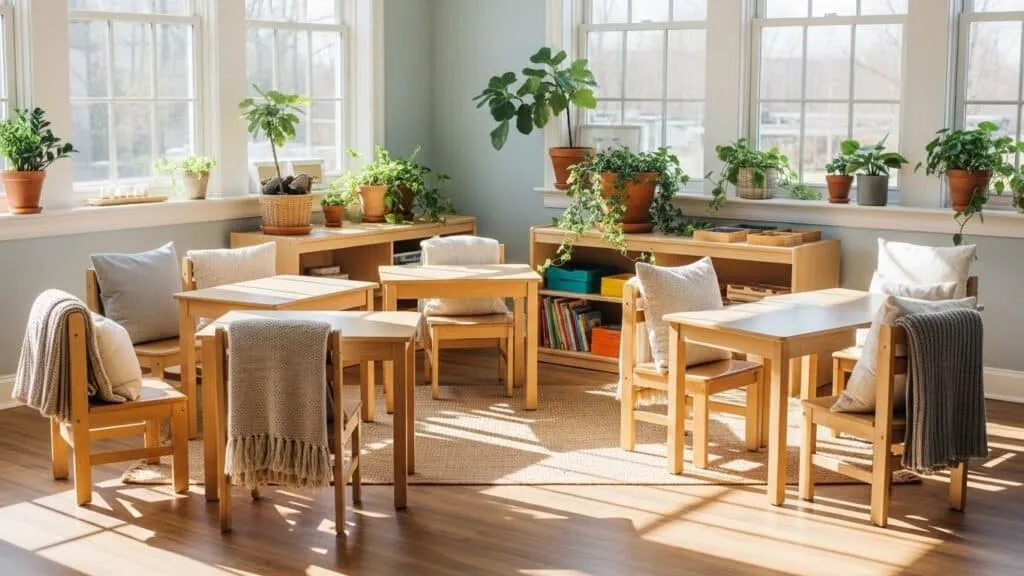
These Cozy Winter Corners Would Make Your Students Never Want to Leave The Classroom
There’s something magical about winter in the classroom — the crisp chill outside contrasts beautifully with warm, inviting corners inside, where students can feel cozy, focused, and inspired. Designing these corners is not just about decoration; it’s about creating spaces that spark curiosity, comfort, and a sense of belonging. From soft reading nooks with layered pillows to little art stations adorned with seasonal decor, these winter classroom corners transform learning spaces into places students never want to leave. The right combination of texture, color, and thoughtful design can make every day feel like a cozy winter adventure while keeping the classroom functional and organized.
A plush reading nook instantly draws students in and encourages quiet moments with a book. Adding soft rugs, layered cushions, and bean bags creates a comfortable, inviting space where children can escape into stories. Incorporating a small bookshelf nearby makes books easily accessible and promotes independent reading. Twinkling string lights or soft lamps can enhance the ambiance, giving the corner a magical, calm feel that contrasts the busy classroom environment. These cozy setups inspire a love for reading while making the classroom feel warm and personalized.


Miniature tent or canopy corners turn a classroom into a playful winter hideaway. Using lightweight fabric over a small frame, you can create little tents filled with pillows and cushions for kids to sit in. Adding winter-themed garlands or faux snowflake decals around the entrance enhances the seasonal vibe. These cozy tents foster imaginative play, small-group reading, or individual quiet time. They also visually break up the classroom space, giving students a sense of ownership over their own cozy corner.


Window ledge seating with cushions creates a natural spot for students to enjoy daylight while reading or drawing. Layering the ledge with soft rugs, small pillows, and a few seasonal decorative accents makes the area visually inviting. You can place a few indoor plants or pinecones nearby to add warmth and texture. This simple setup encourages mindfulness and independent learning while making use of underutilized classroom space. The combination of light, comfort, and subtle decor makes the classroom feel extra cozy during winter months.


A cozy book corner with tiered shelves and baskets keeps books organized while maintaining a warm aesthetic. Grouping books by theme or reading level and adding seasonal soft toys or winter-themed figurines brings charm and visual appeal. Layered rugs or floor cushions make the area more inviting for students to sit and explore the books independently. These corners not only encourage literacy but also contribute to a sense of calm and structure within the classroom.

Soft rug seating clusters foster community and collaboration among students. Circular or square rugs with matching cushions allow small groups to gather for reading, storytelling, or project work. Placing these areas near a bulletin board decorated with seasonal winter art adds a visual anchor. The tactile comfort of rugs and cushions helps students feel grounded and engaged during learning activities, enhancing both social and cognitive skills.

Winter-themed art stations bring creativity and seasonal fun into the classroom. Adding small tables with supplies like paper, markers, cotton balls, and glitter encourages students to make snowmen, mittens, or other winter crafts. Organizing materials in labeled bins keeps the space neat while allowing children to explore independently. Displaying their creations on a nearby wall adds pride and inspiration. These interactive corners promote fine motor skills and artistic expression while keeping the classroom vibrant and seasonal.


A sensory table filled with winter elements captivates younger students. Using faux snow, pinecones, small figurines, and textured materials provides a tactile learning experience. Children can explore shapes, colors, and textures while engaging in imaginative play. Adding a few winter-themed books or cards nearby enriches the corner for both sensory and cognitive learning. These multisensory setups keep students engaged while fostering creativity and curiosity during indoor winter days.


Cozy corner seating with armchairs or small sofas adds a homelike touch. Soft upholstery and layered throws create a warm reading or reflection spot. Pairing these with small side tables for journals or drawing materials encourages independent learning and creativity. Twinkle lights or paper snowflakes hanging above enhance the seasonal atmosphere. This type of corner blends functionality and comfort, giving students a designated space to relax and focus during winter.

Bulletin boards decorated with winter-themed learning materials complement cozy corners beautifully. Incorporating student work, seasonal quotes, and themed visuals turns walls into interactive elements. These boards reinforce learning while enhancing the aesthetic of nearby reading or play spaces. Layered textures, like felt cutouts or cotton snow, add depth and visual interest. Such displays make the classroom feel warm, inviting, and immersive during the winter months.


A reading loft or elevated corner adds dimension and excitement. Using a low platform or small indoor loft structure, you can create a hidden nook filled with cushions and soft lighting. The elevation makes the corner feel special and gives students a sense of ownership and adventure. Adding small shelves with winter books nearby encourages frequent visits. This playful setup combines comfort with novelty, fostering a love for reading and winter learning experiences.


Stacked crate seating with winter cushions is functional and cozy. Wooden crates arranged as low benches can be topped with seasonal cushions and throws to create flexible seating for reading or group work. Adding a few small rugs or rugs with winter patterns enhances warmth and comfort. These modular setups are easy to rearrange, allowing students to customize the space while maintaining a winter-inspired aesthetic.


A small indoor plant corner paired with books and cushions adds life and calm to winter classrooms. Choosing low-maintenance plants and arranging them with seasonal decor like pinecones or winter-themed figurines creates a visually appealing and nurturing area. Students can use the corner for quiet reading or reflective journaling. Bringing a touch of nature indoors during winter fosters a sense of connection and wellbeing.


Curtain or fabric-draped corners create semi-private nooks. Hanging sheer or patterned fabric over a small frame or rod separates the space visually while keeping it light and airy. Adding pillows, rugs, and seasonal accents inside makes the corner a cozy retreat for reading, writing, or quiet play. Children enjoy the sense of privacy and imagination such a corner provides, making winter days indoors more engaging and comfortable.


A corner with low shelves and rotating seasonal bins allows children to explore themed materials independently. Each bin can hold winter books, puzzles, or craft supplies, encouraging self-directed learning. Placing the corner near a reading rug or table ensures students can immediately engage with the materials. Rotating the contents based on seasonal themes keeps the area fresh, exciting, and educational throughout winter.

Layered floor mats and small pillows for collaborative work encourage social interaction. Arranging these mats near bulletin boards or windows gives students cozy spaces for small-group reading or project time. Adding winter-themed decor like felt snowflakes or tiny pine trees enhances seasonal engagement. These simple touches make the classroom feel intentionally warm and structured, boosting both comfort and productivity.


Interactive felt boards with winter scenes allow students to create stories and move elements around. Children can place felt characters, snowflakes, and trees to build imaginative narratives. This tactile activity encourages storytelling, sequencing, and creativity. Displaying the board near a cozy seating area ensures kids can easily rotate between quiet reading and interactive play. The combination of soft textures and seasonal visuals creates a soothing yet engaging environment.


Warm corner lighting with string lights, paper lanterns, or small lamps adds instant coziness. Soft lighting transforms corners from functional to inviting, making students more likely to linger with books or craft projects. Combining this lighting with plush rugs, cushions, and seasonal accents completes the winter ambiance. This attention to detail helps cultivate a calm, comfortable, and productive winter classroom environment.


A creative display shelf showcasing winter books, student art, and small seasonal decor ties the room together. Adding elements like faux snow, tiny figurines, or pinecones reinforces the winter theme while inspiring students to explore the materials. Placing this shelf near cozy seating areas encourages interaction and makes the classroom feel cohesive and thoughtfully designed.


Finally, multi-use corners with rugs, cushions, small tables, and seasonal accents offer flexibility. Students can read, write, craft, or play quietly depending on the activity. Layering textures, colors, and winter decor elements makes these corners visually appealing and inviting. This approach ensures that every student finds comfort and engagement during cold winter days indoors, blending function with festive charm.


Winter classroom corners prove that thoughtful design transforms learning spaces into magical, cozy environments. Simple additions like rugs, pillows, seasonal decor, and soft lighting can make a classroom feel welcoming, calm, and inspiring. Whether you’re creating reading nooks, craft corners, or multi-purpose spaces, these cozy setups encourage students to linger, explore, and fall in love with winter learning. With creativity and intention, even a simple classroom can feel like a warm, inviting winter wonderland — perfect for sharing on Pinterest and inspiring educators everywhere.


